Local Guide
Stargazing Around Prescott: When and Where to Look Up
No street lighting at 6,400 feet, dry air most of the year, and a Milky Way season from spring to autumn. What decides whether you see anything.
September 6, 2026 · The Owners
Groom Creek has no street lighting. That single fact does more for the night sky than elevation, dry air or anything else on this page, and it is why guests who step outside for the car at eleven o’clock end up standing there for twenty minutes.
What determines whether you see anything
| Factor | Matters how much |
|---|---|
| Moon phase | most of all |
| Cloud | obviously, and monsoon afternoons often clear by night |
| Getting away from town lights | a great deal |
| Letting your eyes adapt | more than people expect |
| Elevation and dry air | helps, but it is the smallest factor here |
Moon phase is the thing to plan around
A full moon washes the sky out. Everything except the brightest planets and stars disappears, and no amount of driving into the forest fixes it.
If dark sky is a reason for the trip, book within about five days either side of a new moon and you will see roughly ten times more than the person who came at full moon and concluded Arizona was overrated. Any moon-phase calendar will tell you the dates a year ahead.
Milky Way season
The bright core is above the horizon from roughly April to September and is at its best around June through August, when it stands up in the south after dark. Outside that window you still get a good sky, just without the part that photographs well.
Note the timing: in June, astronomical twilight does not end until well after 9pm. Going out at 8:30 and being disappointed is a scheduling problem rather than a sky problem.
Let your eyes adapt
Twenty to thirty minutes in the dark, without looking at a phone. Full dark adaptation takes longer than almost anyone allows for, and one glance at a bright screen resets a good part of it. If you need light, red light barely affects it, and most phones have a red filter buried in the accessibility settings.
This is the most common reason people report a mediocre sky from a genuinely dark site.
Where to go
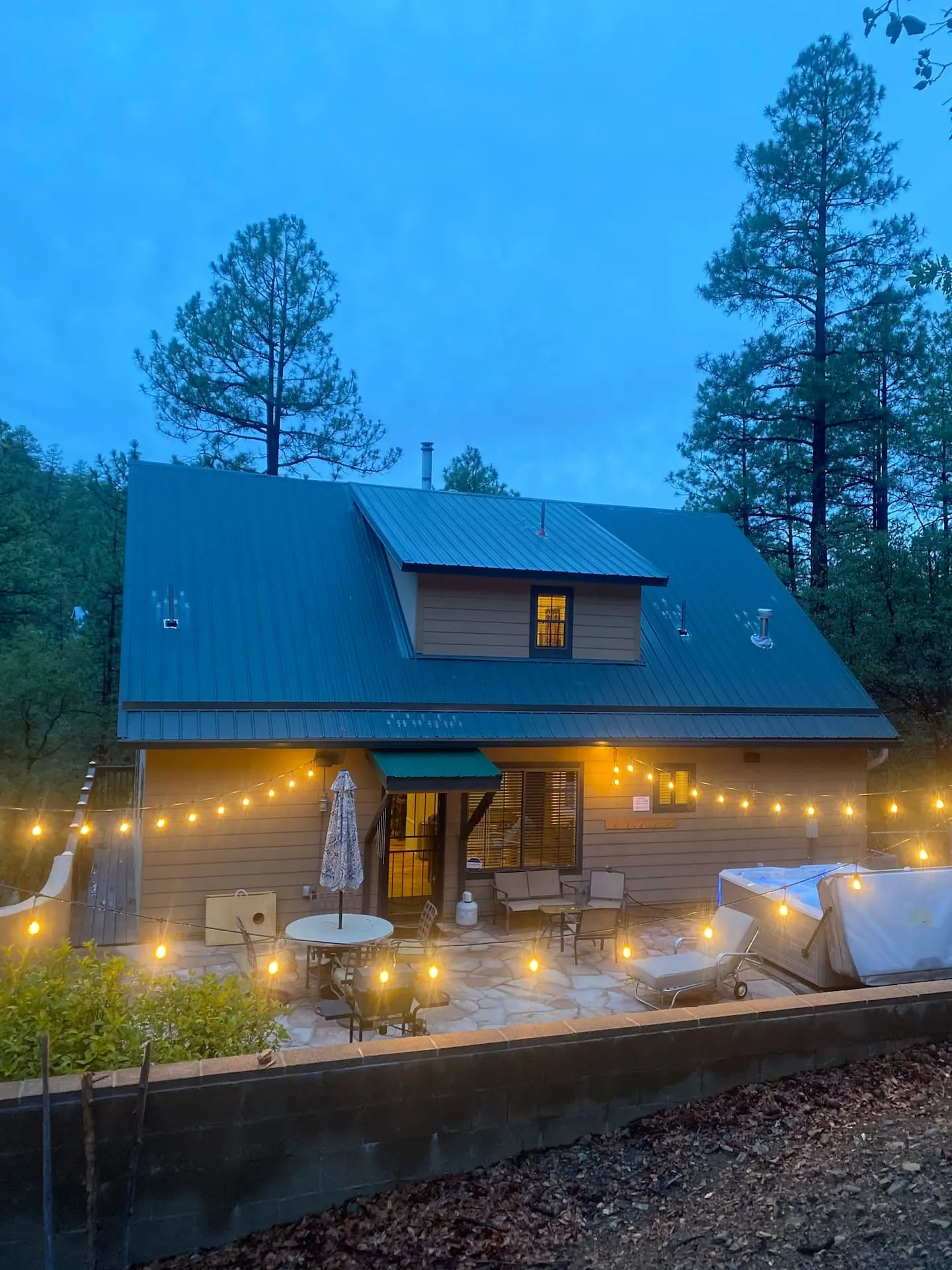
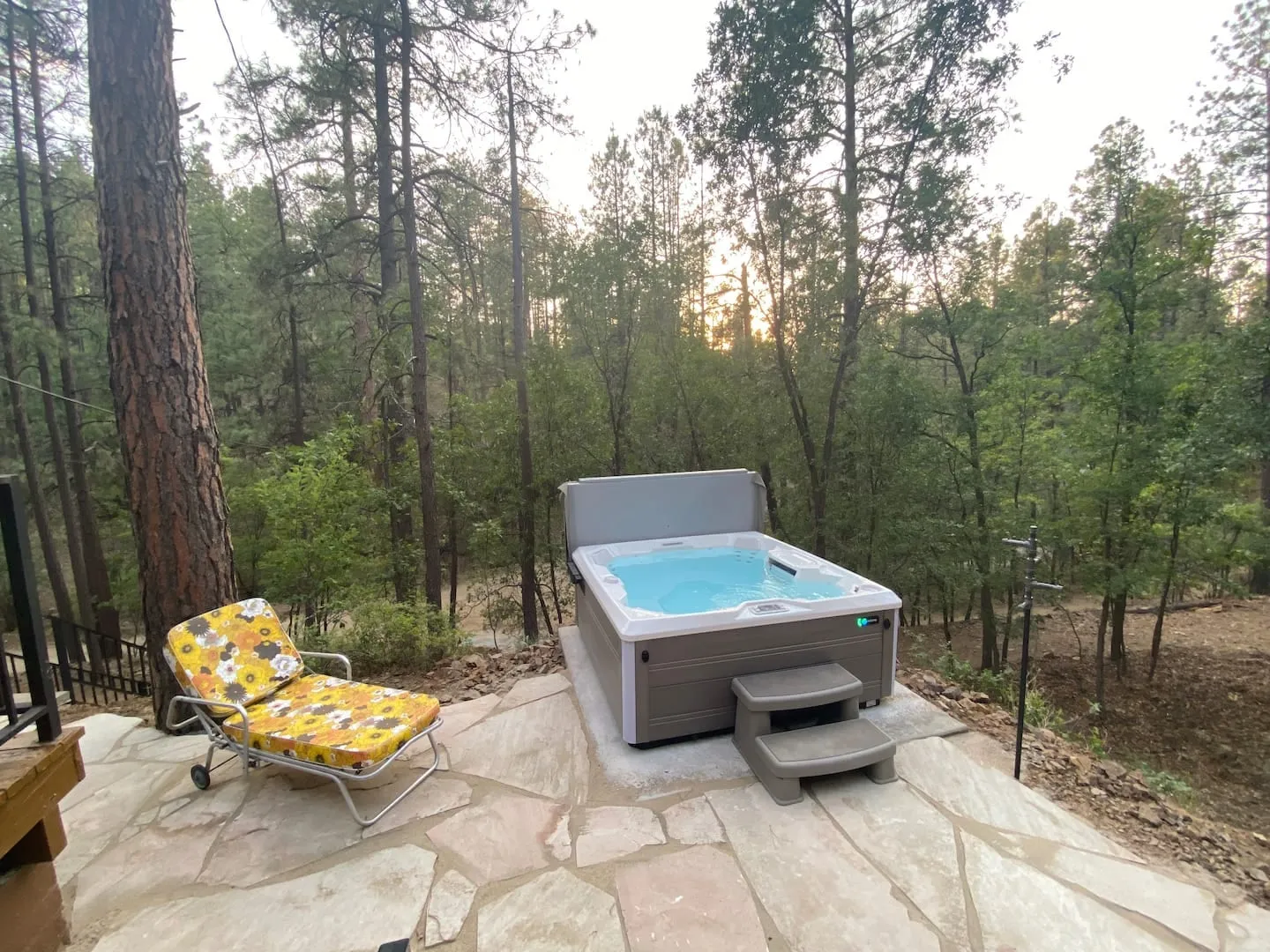
The cabin deck is usually enough, which is the point of staying up here rather than in town. No street lights, trees breaking up the horizon, and you are already outside.
Higher and more open if you want the full horizon: the forest roads south along Senator Highway open out, though bear in mind there is no phone signal out there, as described in cell service in Groom Creek, and fire restrictions may limit where you can pull off.
Not the Constellation Trails, despite the name. They are named after a 1959 aircraft crash, not the stars, and they sit close to town lights.
Winter is underrated
Colder, but the air is at its driest and clearest, the nights are long, and Orion dominates the sky from early evening. You will not get the Milky Way core, but you will get the sharpest seeing of the year and you can be back indoors by eight. Dress for it: what to bring is in what to pack for a Prescott cabin.
Common questions
Is Prescott good for stargazing?
The town itself has the light pollution any town of 45,000 has. Get up to Groom Creek or into the forest, where there is no street lighting, and it is very good. Elevation and dry air both help, and you are far enough from Phoenix that its glow is low on the horizon rather than overhead.
When can you see the Milky Way in Arizona?
The bright core of the Milky Way is up from roughly April to September, highest and best around June to August. Outside that window it is below the horizon for the useful part of the night. Within it, moon phase matters more than anything else.
What is the best time of night for stargazing?
After astronomical twilight ends, which in summer here is not until well after 9pm. Then give your eyes at least 20 to 30 minutes in the dark without looking at a phone. Most people give up before their eyes have adapted and conclude the sky was poor.
Does the moon ruin stargazing?
A full moon washes out everything except the brightest stars and planets. If the sky is the reason for your trip, book within about five days either side of a new moon. This single factor makes more difference than location.
Do you need a telescope?
No. The Milky Way, meteor showers, satellites and the brighter planets are all naked-eye. A pair of ordinary binoculars is the best value upgrade and shows the moons of Jupiter and a good number of star clusters. A telescope is for a later trip.
Hero photo: Coconino National Forest / Public domain
Keep reading

Local Guide
The Constellation Trails: Prescott Hiking Without a Fee
Two and a half miles of loops through the Granite Dells boulders, 232 feet of climb, no entrance fee, and a network that is very easy to get turned around in.
September 6, 2026

Local Guide
Old Town Cottonwood: The Verde Valley Without Sedona Prices
Five blocks of 1920s main street 43 miles from Prescott, a wine-tasting scene grown from Verde Valley vineyards, and a handy base for Jerome.
September 6, 2026

Local Guide
Crown King: The Road Is the Trip
A Bradshaw Mountains mining town at the end of a long dirt road. The two ways in, the vehicle you need, and why Senator Highway is not a shortcut.
September 6, 2026