Seasons
The Monsoon in Prescott: What It Is Actually Like
Arizona's monsoon runs 15 June to 30 September. In Prescott that means afternoon thunderstorms, a 15-degree drop and the greenest weeks of the year.
September 4, 2026 · The Owners
Arizona’s monsoon has a reputation problem outside the state. People hear “monsoon season” and picture weeks of rain, then avoid the two months that are genuinely the best time to be in the pines.
Here is what it actually looks like.
The shape of a monsoon day
| Time | What is happening |
|---|---|
| Morning | Clear and sunny. Cooler than it will be. The window for hiking |
| Around noon | Cumulus starts building over the Bradshaw Mountains to the south |
| 2 to 6 pm | A storm arrives. Hard rain, thunder, sometimes hail, usually under an hour |
| After the storm | Temperature drops 15 degrees. The air smells of wet pine and creosote |
| Evening | Clear, cool, and the best few hours of the day |
That is the pattern, and it repeats. You are not losing days, you are losing an afternoon hour and being handed a better evening in exchange.
The dates
The official season is 15 June to 30 September, a fixed 108-day window the National Weather Service adopted in 2008 to stop the annual argument about when it starts.
The calendar and the weather are different things. In Prescott the genuinely active stretch is July and August. June is usually still dry, hot and windy, which is why it is the worst fire month and, oddly, the best month to escape Phoenix. September tapers off.
Why it is worth planning around rather than avoiding
Three reasons.
The temperature. A storm can take an 88-degree afternoon down to the low seventies in under an hour. Prescott’s average July high of 90°F is a number you only meet on storm-free days.
The colour. The high country is brown and dusty by mid-June. Two weeks into the monsoon it is green, the wildflowers are out, and the creeks run. This is the prettiest the forest gets.
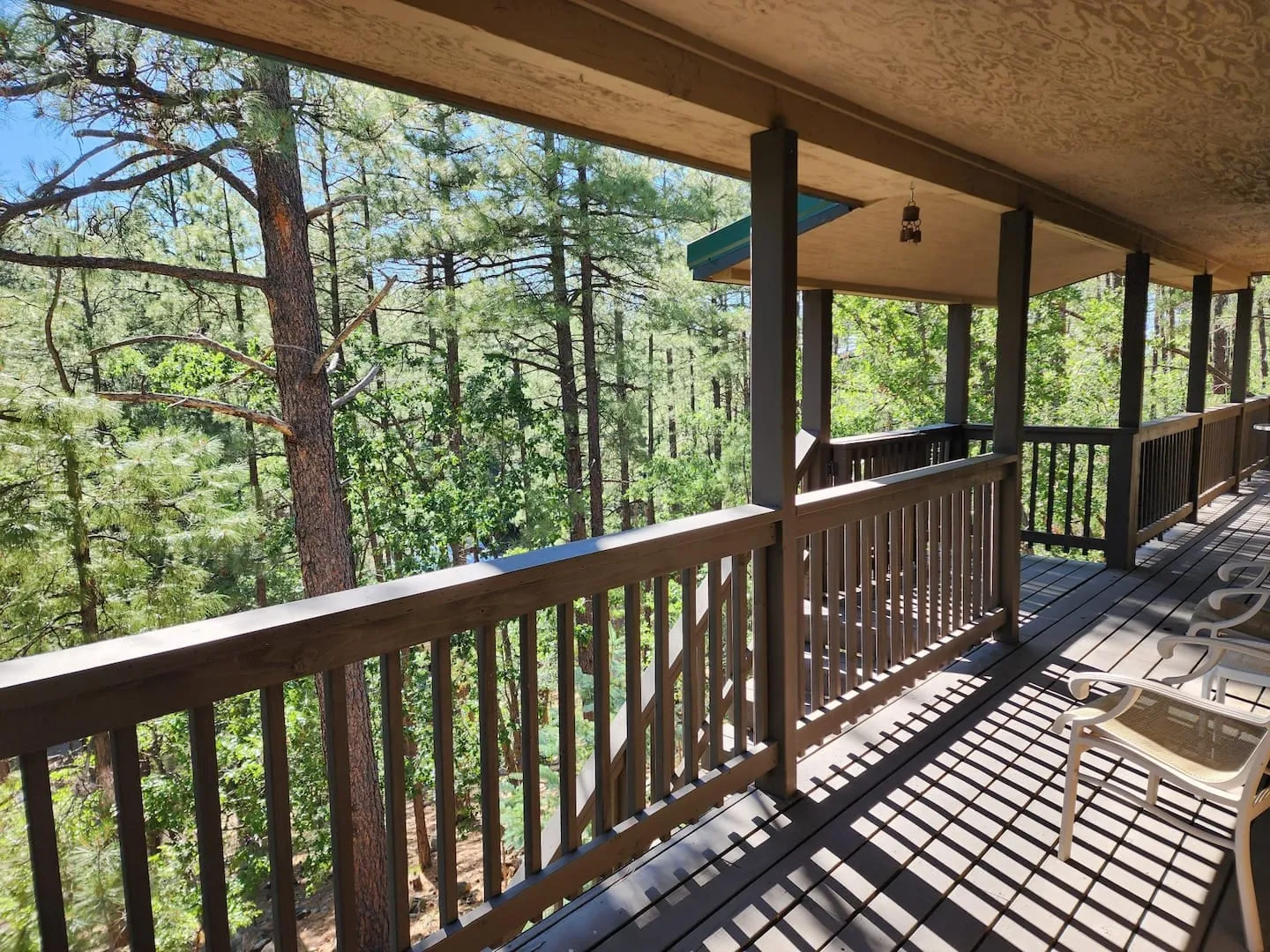
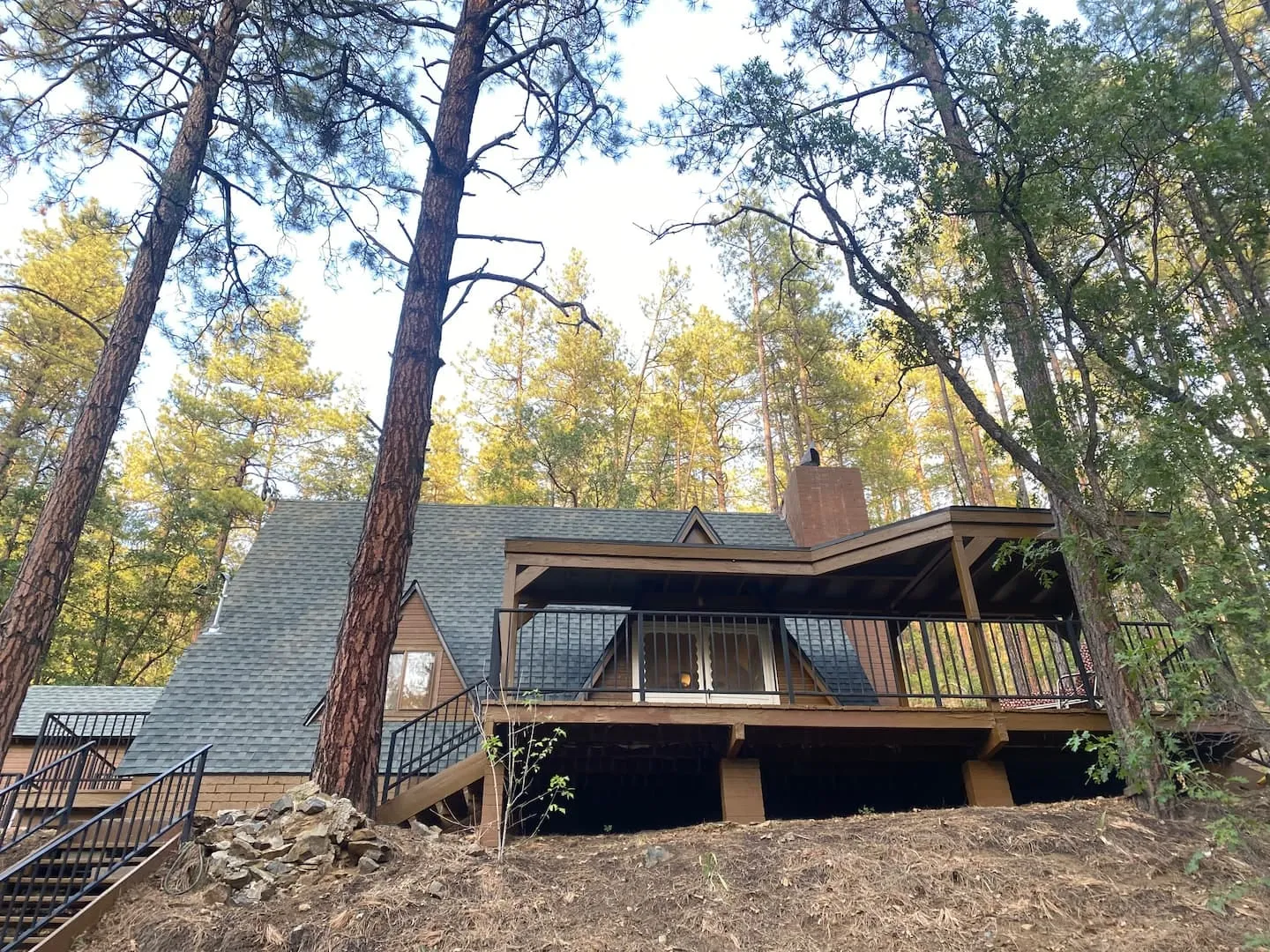
The sky. Watching a monsoon cell build over the Bradshaws from a covered deck is one of the genuine pleasures of a summer here, and it is the reason every cabin in this area has a porch you can sit under.
How to actually plan a day
- Hike in the morning. Be off the exposed granite at Watson Lake or the upper part of Thumb Butte by early afternoon. The pine trails south of town are safer later because you are not the tallest thing around.
- Do the lakes early too. Open water and lightning is the combination to avoid. See the lakes guide.
- Put town in the afternoon. Courthouse Plaza, Whiskey Row and lunch are perfect storm-hour activities.
- Never drive into moving water. Flash flooding hits washes and low crossings, and the water is deeper and faster than it looks. This is the one that kills people in Arizona every year.
- Expect the power to blink. Brief outages happen in a good storm. Both of our cabins have gas hot water and a wood-burning fireplace, but bring a torch if that bothers you.
What it means for the fire ban
The monsoon is what ends fire restrictions. Yavapai County and the Prescott National Forest usually go to Stage 1 in late May and lift somewhere between late August and the end of September once the fuels are wet. In a dry monsoon year, restrictions run the full term. The fire restrictions guide has the detail, and the short version is that propane is always fine and wood never is.
The honest downside
Two things.
Hail. Not common, but a strong cell can drop pea-sized hail and it will dent a car. If you are parked under trees you are mostly fine.
Humidity. The monsoon is the only time of year Prescott feels humid, and if you have come up from Phoenix specifically for dry air, June gives you a better version of that than August. The overnight gap with Phoenix is widest in June for exactly this reason. See the month-by-month comparison.
Where to stay
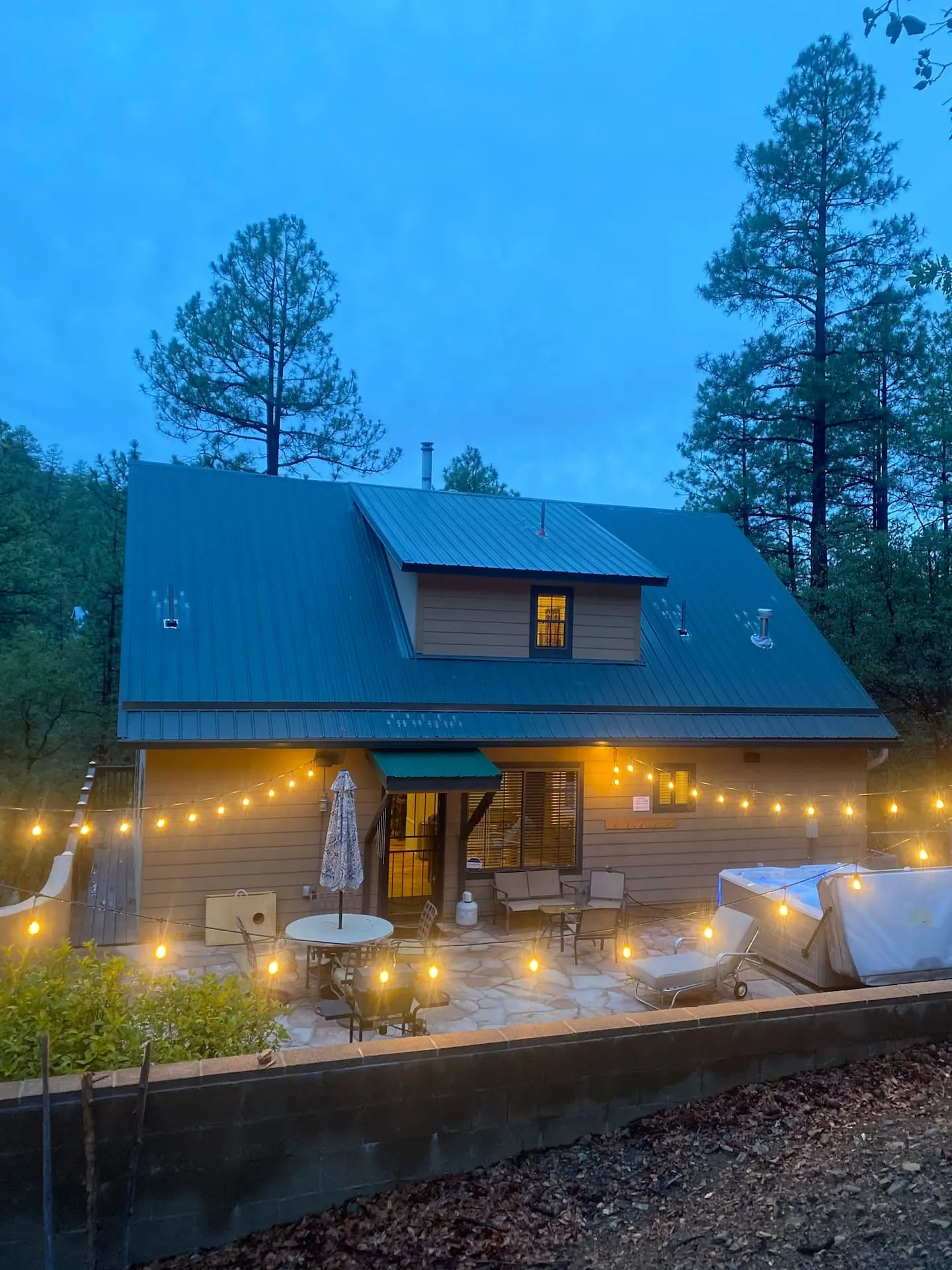
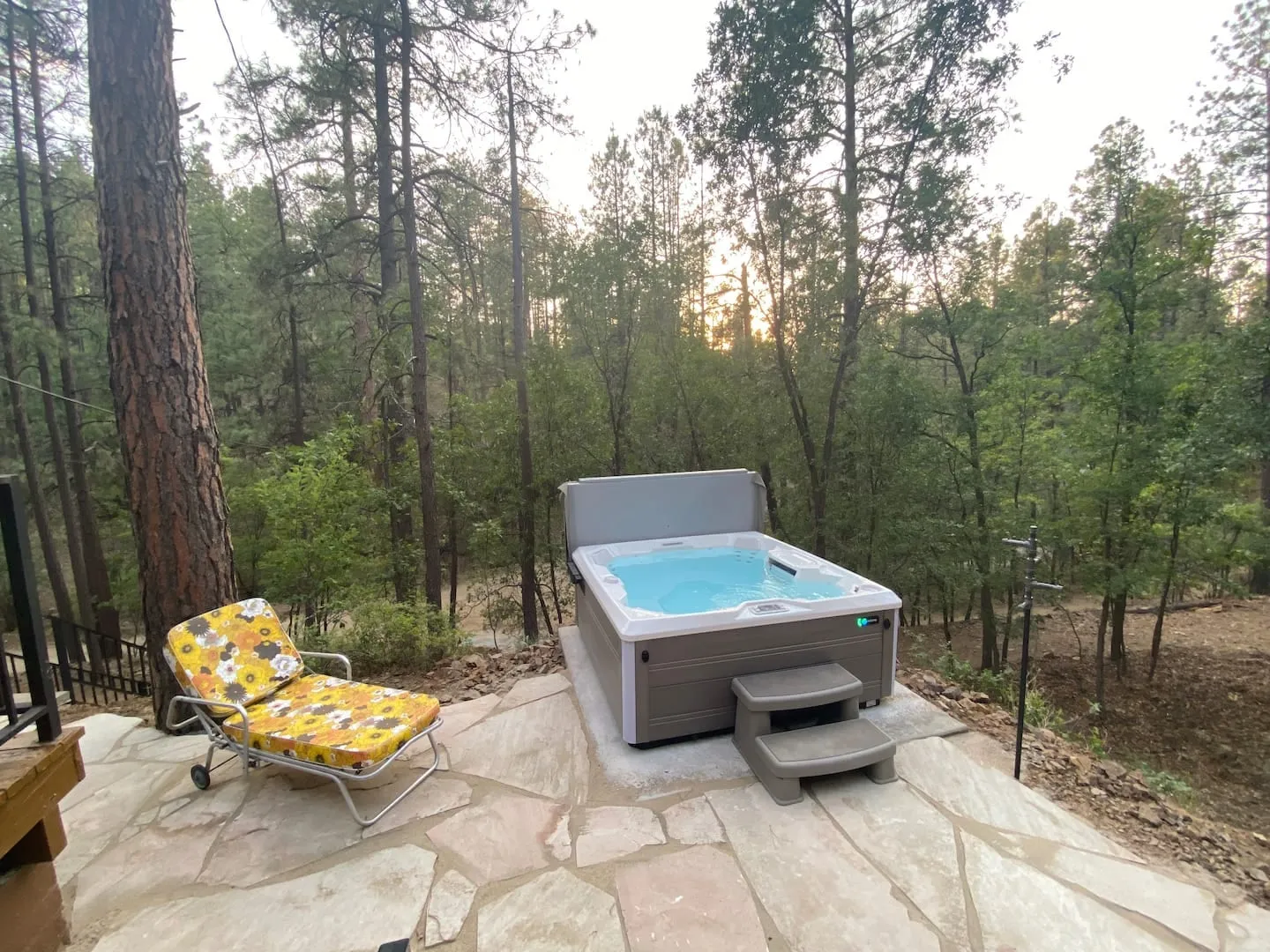
Both of our cabins have covered decks built for exactly this, plus a private hot tub that a rainstorm improves rather than ruins. Check the calendar, or see what each month is like.
Common questions
When is monsoon season in Arizona?
Officially 15 June to 30 September, a fixed 108-day window the National Weather Service adopted in 2008. The storms themselves do not follow the calendar: in Prescott the genuinely active weeks are July and August.
Does it rain all day during the Arizona monsoon?
No, and this is the most common misunderstanding. A monsoon day in Prescott is sunny morning, building cloud from about noon, a hard storm somewhere between two and six, then a clear cool evening. You lose an afternoon hour, not a day.
Should you avoid visiting Prescott during monsoon season?
No. July and August are the busiest months here for good reason. The storms drop the temperature about 15 degrees in an hour, the forest turns green, and the evenings afterwards are the best of the year. Plan outdoor activity for the morning and you will barely notice.
Is the monsoon dangerous in Prescott?
It deserves respect rather than fear. Lightning is the real risk and it is why you want to be off exposed granite and off open water by early afternoon. Flash flooding affects washes and low crossings, so never drive into moving water. Storms are usually over within an hour.
Does the monsoon end the fire ban?
It is what usually does. Once the storms have soaked the fuels through July and August, restrictions typically lift somewhere between late August and the end of September. In a dry year they run the full term to 30 September.
Keep reading

Seasons
Wildflowers Around Prescott: Two Seasons, Not One
The high country blooms in late spring and again after the monsoon. What flowers when, where to look, and why the desert bloom is a different trip.
September 6, 2026
Seasons
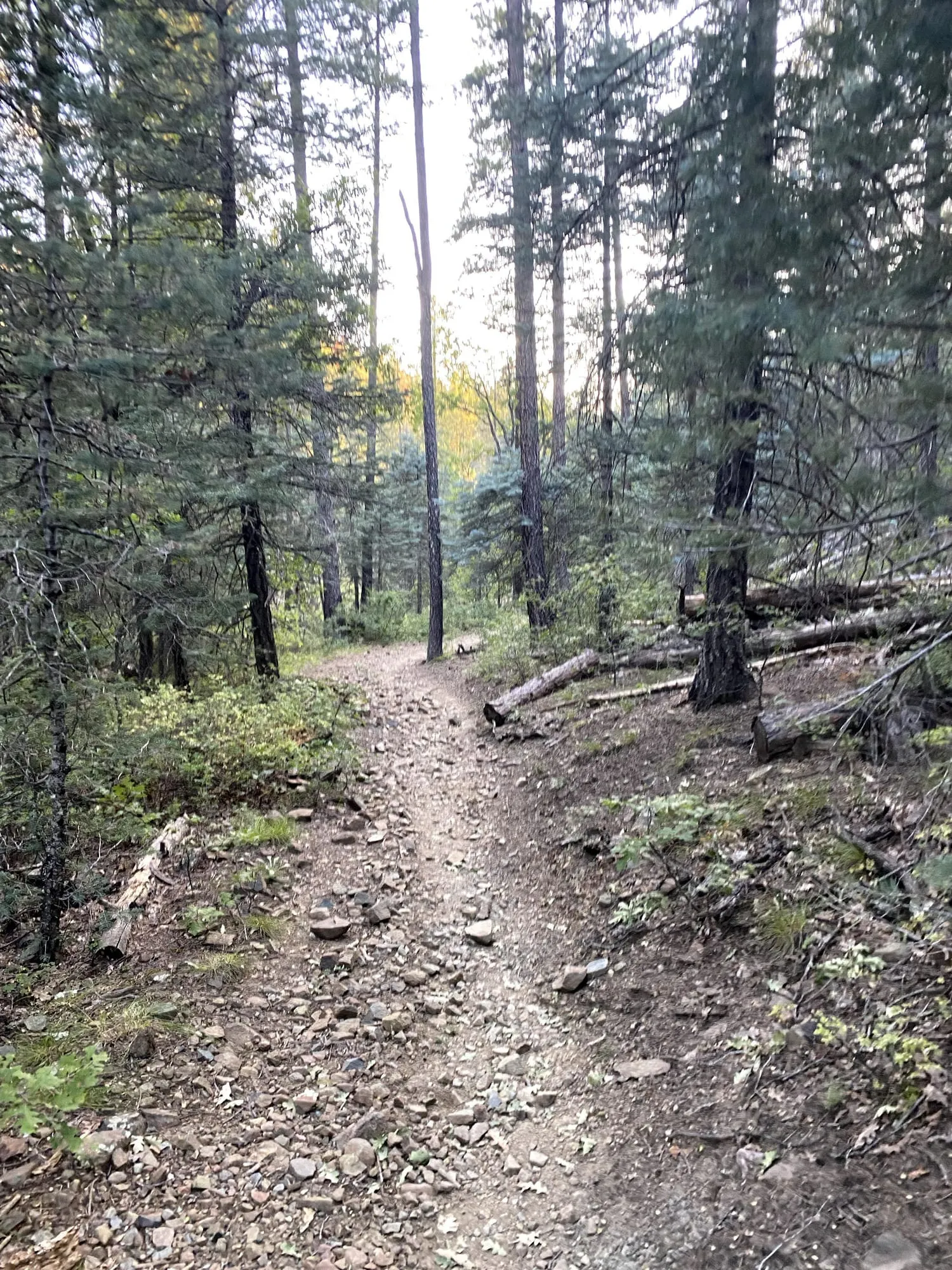
Prescott in the Fall: Golden Light & Quiet Trails
Fall might be Prescott's best-kept secret, golden cottonwoods, crisp air, empty trails, and cozy cabin nights. Here's why autumn is the time to come.
June 4, 2026
Seasons
How to Escape the Phoenix Heat in a Prescott Cabin
Phoenix hits 110°F while Prescott sits in the 80s. Why a cabin in Prescott's pines is Arizona's easiest summer escape, and what to do when you arrive.
May 15, 2026